
![]() | |
| Barrister & Solicitor Suite 500 - 27 Queen Street East Toronto, Ontario M5C 2M6 |
| STANDING COMMITTEE ON PUBLIC
Honourable Members:
RE: BILL 5 - WILDLIFE AMENDMENT ACT I am the Vice-President, a Director and legal counsel for the Avicultural Advancement Council of Canada, which is the national organization of pet bird owners, bird breeders, clubs and aviculturists, and a Director of the Parrot Association of Canada, the national organization of parrot owners and breeders for conservation.
AACC was a consulting member to the Federal Government committee that implemented WAPPRIITA, the federal legislation on endangered species. I serve as a public consultation representative of aviculturists to the Canadian Section of CITES, the international body that classifies endangered species.
I have owned parrots for many years and know a bit about "exotic birds". I have practised law for over 20 years and have considerable knowledge of various local, provincial and federal legislation dealing with animals. I was involved in the implementation of the Toronto Animal Control By-law, which deals with the keeping of exotic animals in the City, and I am a member of the Animal Services Advisory Committee to Toronto City Council.
I have reviewed the proposed amendments to the Wildlife Act and have identified a number of serious problems with them and their effect on the keeping, breeding, and study of all birds in Manitoba. It has been said that they deal only with penned hunting of animals in private shooting preserves or wildlife farms. After a careful review, I can say that they have almost nothing to do with penned hunting and have everything to do with banning so called "exotic" birds and other animals in Manitoba.
The current Wildlife Act deals with hunting and trapping of native wild animals. The proposed amendments would make it illegal not only to hunt but also to own and possess almost all animals.
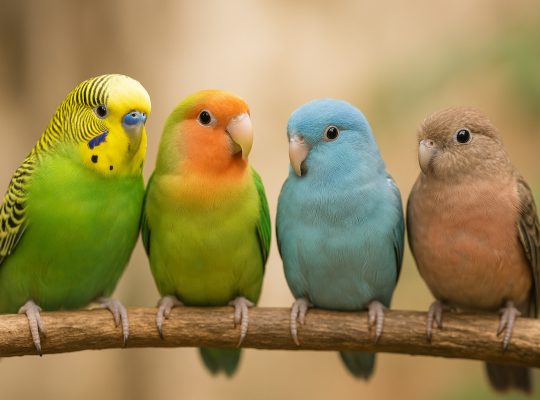
The amendments introduce a definition for "exotic wildlife" which is so broad that it includes birds and animals that have nothing to do with penned hunting. By defining exotic wildlife as "wild by nature," it effectively includes many pet companion birds, such as parrots, budgies, lovebirds, cockatoos, macaws and others, which have been domestically bred in Canada and which have been owned for many years. Most birds will be considered wild by nature.
The Act would prohibit the "possession" of these birds and would automatically make all pet, companion and aviary birds illegal in Manitoba. There are no exemptions allowed for existing pet birds which have been cherished members of families for many years. There is no exemption for birds in domestic breeding programs or in zoos and universities. This would have serious consequences, not only for the owners, but for aviculture and society in general.
These amendments clearly have little or nothing to do with penned hunting. How does one hunt an "egg, sperm, embryo or body part"? This wording is more appropriate to "endangered species legislation", not to a law dealing with hunting.
In Canada, several hundred thousand people own one to two million pet and aviary birds. AACC each year sells eighty thousand identification bands for birds that have been bred in Canada and this represents only one quarter of those that are bred here.
So called exotic birds like parrots now come exclusively from domestic breeders, are bred in Canada and are not taken out of the wild. It is a common public misconception that these beautiful creatures are trapped in the wild and brought here to spend their lives in cages. This simply is not true. Domestic breeders are contributing to the preservation of these species, not endangering them.
Both Canada and the United States have passed legislation that imposes tremendous penalties for smuggling endangered or threatened bird species. A breeder has recently gone to prison in the United States for seven years for smuggling endangered birds. They don't jail drug smugglers for that long!
If the amendments are passed, there is no doubt that they will be subjected to a legal challenge because of the serious abrogation of people's rights and the clear infringement on an area of Federal jurisdiction which has already been legislated. Can you imagine the public outcry if provincial enforcement officers tried to seize beloved pet birds and valuable breeding stock?
Enclosed is an analysis of the effect of the proposed amendments which I have prepared and which goes into considerably more detail. Please read it and I would be happy to discuss it with you if you wish to telephone, e-mail or write to me.
I hope this material will be of assistance to you in your deliberations and I would ask you to seriously consider substantial changes to the draft legislation. As it is currently written, it will have serious implications for parrot and other bird owners. I understand that the intent of the legislative changes is not to target these people, but please understand that will be the legal effect.
Also, as a side note, consideration should be given to providing more notice to your constituents. Even residents of Winnipeg would have difficulty rearranging their work schedules to attend the Committee hearing on what amounts to less than two days notice. Such short notice makes it almost impossible for there to be any meaningful public input into the legislative process and raises negative connotations as to its purpose.
Thank you for allowing me the opportunity to make this presentation and I would certainly be pleased to provide any additional information or answer any of your questions if you wish to contact me directly.
Yours very truly,
CHRISTOPHER HOLOBOFF |
| The proposed amendments to the Manitoba Wildlife Act will have serious consequences for all bird owners in the province. People with pet birds, such as budgies, cockatiels, parrots, macaws and others, breeders for the pet trade and for conservation, researchers and educators, pet store owners, suppliers and manufacturers, zoos and aviculturists will all be affected.
THE PURPOSE OF THE AMENDMENTS
The stated purpose of the amendments is to prohibit or regulate "penned hunting" of animals in private shooting preserves or wildlife farms. The amendments are supposed to deal with the commercial hunting of certain animals like wild boar, antelope and others that are currently carried on in private preserves.
THE EFFECT OF THE AMENDMENTS
Unfortunately, the actual effect is to prohibit the keeping of all "wild" animals, exotic or native. The amendments as proposed will ban all exotic birds and animals even though they may be domestically bred, are completely tame and have never been in the wild.
The current Wildlife Act regulates hunting and trapping of native wild animals and deals with licensing hunters and trappers, regulating what animals can be hunted and creating offences for illegal hunting and trapping. The legislation promotes a conservation perspective and Sections 2 and 3 clearly state that the purpose is the "better management, conservation and enhancement of the wildlife resource of the province."
It deals primarily with animals in the wild and only peripherally with wild game farms and hunting preserves. The proposed changes will go much further.
Simply put, the amendments will make it illegal to own so-called "exotic wildlife" which will include all birds, parrots, budgies, canaries, lovebirds, macaws, finches and others. The new definition will include any animal wild by nature not indigenous to Manitoba and will apply to almost every non-native bird and animal in existence. The Act states that no one shall possess such an animal, which will include owning, keeping, breeding, selling or dealing with them in any way. The amendments go on to create strict liability offences presuming guilt and requiring a person charged with an offence to prove their innocence.
SUMMARY OF THE AMENDMENTS
EXOTIC WILDLIFE DEFINED
The amendments introduce a new definition:
" 'Exotic wildlife' means a live or dead animal of any species or type that is
(1) wild by nature but not indigenous in the province, and is declared by the regulations to be exotic wildlife,
(b) a hybrid descendant of an animal described in clause (a), or
(c) an egg, sperm, embryo or body part of an animal described in clause (a) or (b)."
There are several problems with the definition:
_ It includes birds "wild by nature" even though they may have been domestically bred and kept for many years.
_It does not exempt birds that have been bred domestically and that have not been taken out of the wild.
_ It does not exclude birds that have been legally acquired under Federal legislation.
_ Any bird can be declared prohibited merely by regulation, that is, a government official will decide which ones will become illegal.
One has to ask what this has to do with penned hunting. How do you hunt "an egg, sperm, embryo or body part"? This wording is taken right out of "endangered species legislation" that is intended to prohibit the keeping of exotic animals entirely.
"Wild by nature" does not mean "wild caught" and is extremely broad and unrestrictive. Most birds are considered to be wild by nature and the definition will include all parrots, budgies, cockatiels, canaries, finches, cockatoos, macaws and all other birds, whether native or foreign. Gordon Graham, a legislative specialist with the Manitoba Wildlife Conservation Branch has readily admitted that parrots and other pet birds definitely fall within the definition.
It will include tame birds and pets, aviary birds, birds that are bred domestically and birds in zoos, universities and other research facilities. It will include all birds except chickens. It will probably include by definition turkeys, geese and ducks.
It will include birds bred in Canada that have not been taken out of their wild habitat. It will include birds brought in legally under the Wild Animal and Plant Protection and Regulation of International and Interprovincial Trade Act, the Federal legislation which establishes a comprehensive code dealing with endangered species. It will include all species of birds regardless in which CITES Appendix they appear and even if they do not appear on the Control List at all. It will make birds illegal that are legal everywhere else in Canada under the Federal legislation.
The proposed amendments ignore entirely the fact that all birds ordinarily kept as pets and companions and as aviary birds have been bred by domestic breeders and are domesticated for all intents and purposes.
POSSESSION PROHIBITED
Section 45 of the current Act then kicks in and provides that:
"No person shall capture alive or have possession of any live wild animal."
This will make it illegal to own and keep exotic birds, not just hunt them. It will make it an offence to simply possess them. Mr. Graham has said the legislation will only prevent "hunting of parrots," not keeping them, and that clearly is not the case.
Enforcement officers will be able to search premises and vehicles, seize animals without a warrant and dispose of any live exotic wild animal in captivity by "selling, donating killing and destroying it, or setting it free."
_ In Manitoba it would be illegal to own, keep, possess, breed, propagate, import, export and otherwise deal with any exotic wildlife, including birds like parrots, budgies, lovebirds, macaws, canaries, finches, and all other birds.
_ It would be illegal to possess an egg, sperm, embryo or body part of exotic wildlife. (This would include a feather.)
_ It would allow permits to possess exotic wildlife only for "educational or scientific purposes."
_ Where a person is charged with keeping any exotic wildlife that is prohibited or having had it in his possession, he is presumed to have committed the offence with which he is charged. (In other words, you will be presumed guilty until proven innocent.)
_It would regulate the sale of exotic wildlife raised and kept in captivity and the sale of exotic wildlife brought into the province. (This is considerably more prohibitive than the current provisions which merely regulate the sale of wild animals raised and kept in captivity on wildlife farms or brought into the province to start wildlife farms or private shooting preserves. In fact, it appears that the current law is sufficient to regulate penned hunting without the amendments.)
_ It would require licences for the possession, raising and propagation of exotic wildlife in captivity. (Again, this is much more prohibitive than the original section which dealt with licensing and regulating of shooting preserves and wildlife farms and the keeping, raising and propagation of wild animals on them.)
PENNED HUNTING NOT DEFINED
There is no definition of "penned hunting" anywhere in the Act or in the proposed amendments. It is not even implicitly referred to. There is no specific provision that states penned hunting is prohibited or controlled. There is no reference whatsoever to the activity for which the amendments are supposedly intended. No matter how far you stretch legislative interpretation, there is no way to state unequivocally and with certainty that these amendments deal only with penned hunting.
The amendments clearly go far beyond the banning of penned hunting. Either the changes have been carelessly drafted or this is an attempt to expand the scope of the Act beyond regulation of hunting in order to target ownership of all exotic species, including birds.
By definition, it would be illegal to keep a bird that is "wild by nature and not indigenous in the province", whether or not it was domestically bred or allowed under Federal legislation.
If the purpose is to control or ban penned hunting, why is there no definition of what constitutes penned hunting and no specific provision that states penned hunting is prohibited? Why introduce concepts of "keeping and possession" when the Act currently refers throughout to "hunting, killing or taking"? Why include "egg, sperm, embryo or body part" in the definition? How does this relate to penned hunting or to "the better management, conservation and enhancement of the wildlife resource of the province"?
The attempt to create what is known in law as a strict liability offence and reverse the burden of proof onto the owner of the animal (in other words, a presumption of guilt) is an extremely serious abrogation of a basic legal right and should not be included at all.
Given the broad scope of the proposed regulatory powers, extensive work and expense will be involved in administering and enforcing the new law if these amendments are implemented. In addition to regulating penned hunting, an entirely new bureaucracy will have to be created for the regulation of the breeding, importation, keeping, sale and "other activity" involving all exotic animals, birds included.
Why duplicate a system that the Federal government already has in place and pays for?
PROPOSED CHANGES TO THE AMENDMENTS
If the Government of Manitoba wants to prohibit or regulate hunting on private preserves, the legislation should deal specifically with it and not try to amend existing legislation designed to regulate hunting of animals in the wild. Frankly, I believe that the current Wildlife Act already provides for regulation of penned hunting in Section 90(gg) and (hh).
Penned hunting does not involve only exotic animals; it also involves native species that have been bred for that purpose. Since this falls outside traditional hunting activities, it should be carefully drafted and extensively debated on its own merits so that it is clear what is intended and what rights are being affected.
As a bare minimum, the following changes should be made to the proposed amendments:
_Since "exotic" birds such as parrots, budgies, canaries, lovebirds, and others are not kept for hunting, penned or otherwise, it makes no sense to have a definition that includes them in an Act regulating hunting. The objective is to prohibit penned hunting of all wildlife and the definition of "exotic wildlife" should be deleted entirely.
_ Words like "own", "possess", "keep", "breed", "raise", and "propagate" should be deleted. The only thing that should be prohibited is captive or penned "hunting" which must be clearly defined and specifically dealt with.
_ Animals that are kept for purposes other than hunting should be clearly excluded. There is no reason to include birds that are kept and bred for pets, companions, conservation and research.
_ Penned hunting should be dealt with in its own legislation or, at the very least, in an exclusive Part of the Wildlife Act.
If, on the other hand, the Government wants to pass laws banning exotic species outright, including those that have been historically kept as pets, then they should do so by tabling a specific Act for that purpose and not try to hide it within unrelated legislation. It should be careful not to infringe on Federal jurisdiction where comprehensive legislation already exists. It makes it extremely difficult for people to understand the laws that govern them if there are several conflicting versions at the Provincial and Federal levels.
It should not be illegal in Manitoba to own pet and other birds that you are allowed to bring into Canada under WAPPRIITA.
It is both unfair and dishonest to attempt to disguise such serious legislation in an Act which is intended only to regulate hunting and trapping. It is particularly disturbing to hear it defended as a response to "strong concerns over the ethics of penned hunting."
Otherwise, the legislation will bring untold grief and suffering to innocent owners of pet and companion birds that happen to be "exotic". It will damage a healthy and responsible pet industry in the province and open up pet retailers to harassment and prosecution. It will discourage the production and manufacture of food, cages, toys and other related products.
Most regrettably, it will discourage and eliminate breeding both for the pet trade and for conservation purposes. Domestic breeders of exotic animals are helping to preserve them from extinction, not endangering them.
CHRISTOPHER HOLOBOFF |
| | Information | Committee | | Program |
| Articles | Consortium | Chronicles | | Award |